DTE is selling Vantage. Why does it need more equity?
A nearly $3 billion divestiture will help pay for more utility investment. The new plan still calls for more annual share issuance than before.
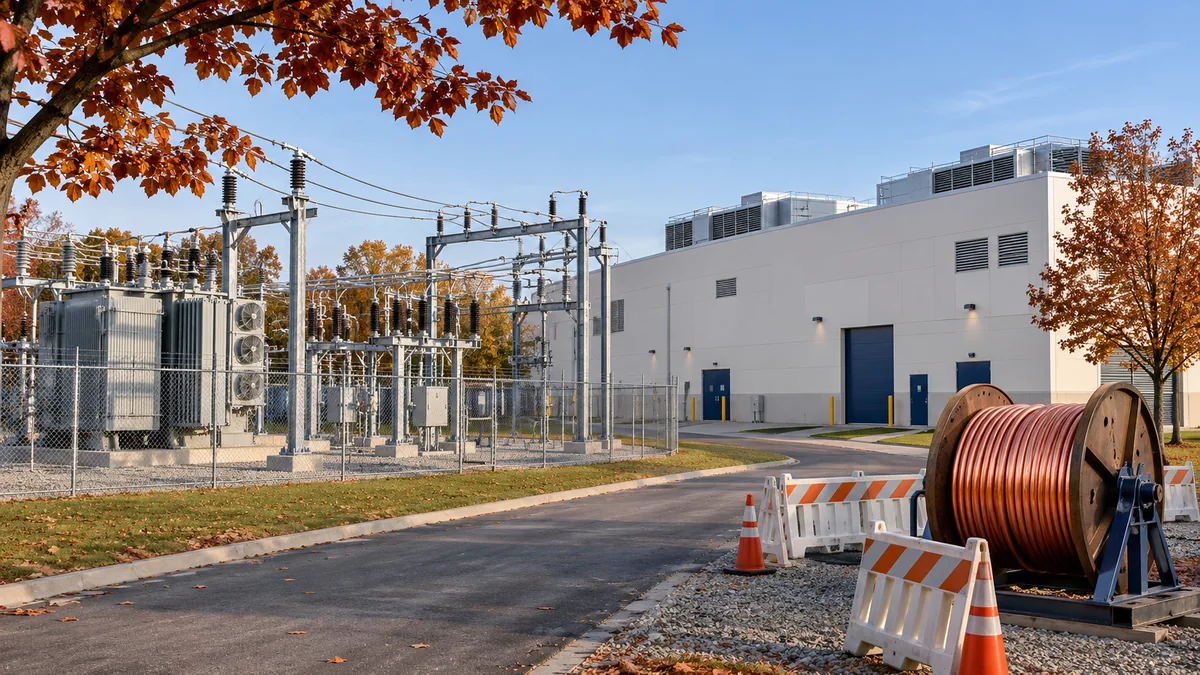
DTE Energy has agreed to sell most of its Vantage business for nearly $3 billion as it steps up spending on its electric and gas utilities. The sale will help pay for a $44.2 billion investment plan, including infrastructure to serve data centers.
Shareholders will still help fund that expansion. DTE's new plan calls for roughly $1 billion of annual equity issuance, a larger amount than its previous plan required.
The attraction is faster long-term earnings growth from regulated utilities. The question is how quickly those investments turn into profit per share while DTE raises capital and gives up the earnings from the assets it sells.
The sale supplies capital for a larger plan
The November 1 agreement puts a base price of about $2.97 billion on the Vantage assets being sold, subject to closing adjustments. The buyer, Velocity BidCo, is owned by institutional investors advised by J.P. Morgan Asset Management's infrastructure group.
DTE expects the transaction to close in 2027, subject to regulatory approvals and other conditions. It will keep EES Coke and its separate Energy Trading business.
The updated utility plan covers 2027 through 2031: $39 billion for DTE Electric and $5.2 billion for DTE Gas. Its previous utility plan covered 2026 through 2030 and totaled $34.5 billion. The new plan includes more spending on generation and the distribution network, with Google's data-center contracts now approved and included.
More shares remain part of the funding mix
Research by Ticker Byline shows that September's plan called for $500 million to $600 million of annual equity issuance through 2028, with similar levels planned through 2030. The new plan calls for about $1 billion a year from 2027 through 2031.
DTE says the Vantage proceeds reduce the equity and debt needed for its expanded plan. The larger investment program still requires shareholders to supply more capital than September's plan envisaged.
The company also plans to defer $500 million of equity sold under forward contracts from 2026 into 2027. That postpones the share issuance. The contracts remain part of the funding plan.
DTE says Oracle's power demand should ramp up in 2027, followed by Google's full ramp by the end of 2028. Its investment opportunity depends on building the infrastructure and bringing that customer demand onto the system.
A faster growth target starts from a modeled base
DTE now targets average annual growth of more than 9% in operating earnings per share from 2027 through 2031. Its previous target was 6% to 8% through 2030, measured from the 2026 guidance midpoint.
The new target uses a modeled 2027 earnings baseline of $7.59 to $7.73 per share. That calculation assumes the Vantage sale closes by the end of 2026. The actual closing is expected in 2027, so the earnings DTE ultimately reports that year will also reflect the timing of the sale and reinvestment of its proceeds.
For 2026, DTE kept its existing operating earnings forecast of $7.59 to $7.73 per share and said it was positioned to reach the high end.
The current quarter shows what is changing
Third-quarter operating earnings, DTE's adjusted profit measure, rose to $481 million from $468 million. Vantage contributed $110 million, up from $41 million, helped by renewable-gas and investment tax credits. DTE Electric's contribution fell to $468 million from $541 million as tax timing, higher costs associated with its asset base and storms outweighed benefits from rates and warmer weather.
Investment is already running ahead of internally generated cash. In the first nine months, DTE produced $2.45 billion of operating cash flow and spent $4.11 billion in cash on plant and equipment, before paying $701 million in common dividends.
For shareholders, the test is whether a larger regulated asset base supports faster per-share growth as new shares enter the market. The DTE Energy company profile tracks the sale, funding plans, financial results and retained businesses.