LCI's growing businesses can't fill its RV sales gap
Cost savings lifted adjusted earnings, but the component supplier is lowering the top end of its 2026 outlook as new RV demand stays weak.
LCI Industries is finding more business in vehicle repairs, transportation, marine and housing. Those gains face a bigger loss: sales to RV manufacturers fell $80.2 million in the third quarter.
The growing businesses replaced only about 45% of that lost revenue. Their combined sales increase of $36.2 million left the component supplier's total sales down 4%, at $992.5 million.
The gap is showing up in LCI's outlook. On November 5, it lowered the top of its full-year adjusted sales range to $4.0 billion from $4.1 billion. The top of its adjusted earnings forecast fell to $8.50 per share from $8.75. Both lower bounds stayed unchanged.
Preliminary October adjusted sales of about $341 million were 10% below a year earlier. That leaves cost savings and growth outside new RV production doing more of the work.
How LCI is protecting profit
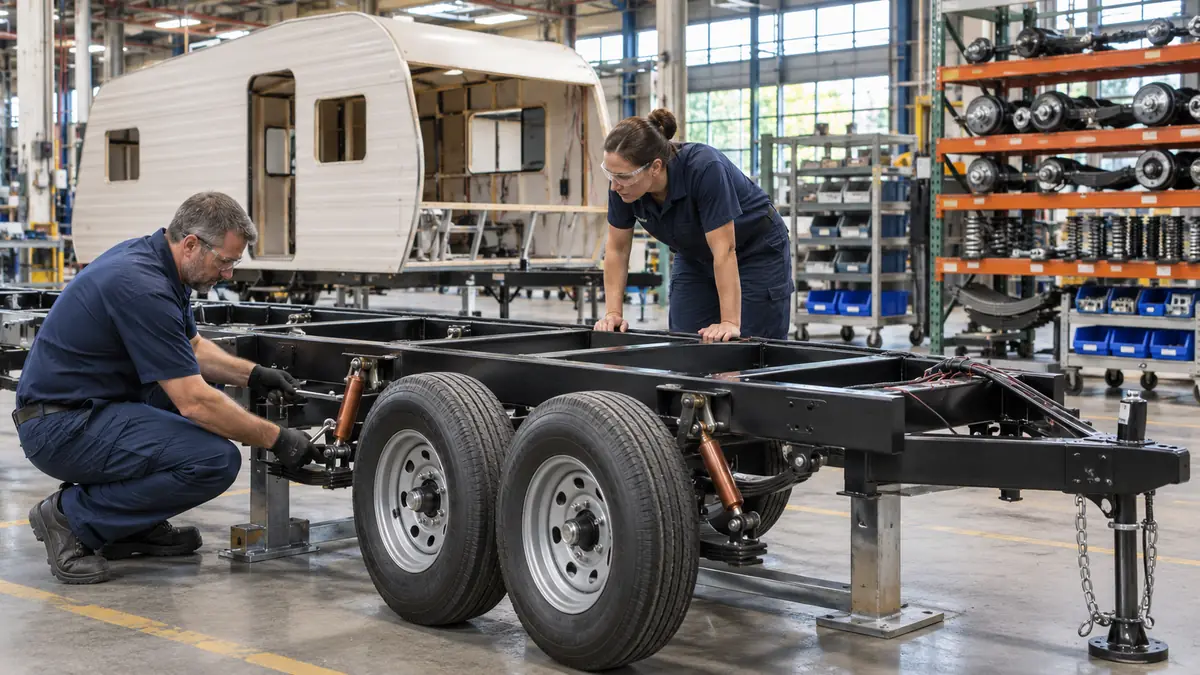
LCI supplies axles, windows, furniture and other components through Lippert. Fewer new RVs mean fewer opportunities to sell those parts. A shift toward single-axle trailers with fewer LCI parts is adding pressure.
Supplier savings and price increases tied to commodity costs helped cushion the decline. LCI's adjusted operating margin rose to 8.3% from 7.3% a year earlier, excluding merger and restructuring costs. That means it kept more operating profit from each dollar of sales on that basis.
Adjusted profit per share increased 12% to $2.21. That measure removes items including merger and restructuring costs, property gains and tariff-refund interest. Reported net profit fell to $50.1 million from $62.5 million; the year-earlier quarter included a much larger property gain.
The company described its full-year adjusted operating margin target of 7.5% to 8.0% as reaffirmed. Chief Financial Officer Lillian D. Etzkorn credited cost reductions and operating improvements for preserving the margin outlook despite weak demand.
Research by Ticker Byline shows that Q3 operating cash flow fell 31% to $67.1 million from $97.2 million a year earlier. We reconstructed the quarter by comparing the company's half-year and nine-month cash-flow statements.
The quarter included $57.6 million in tariff refunds paid to customers, against $19.7 million received, plus interest. The main profit effects had been booked in Q2. LCI's cash balance rose to $245.6 million from $216.5 million at June 30.
A weaker market before the merger vote
The results arrive ahead of the November 18 shareholder votes on LCI's proposed all-stock merger with Patrick Industries. LCI continues to expect closing in the first half of 2027, subject to approvals. The companies target $150 million in annual net cost savings within three years after closing.
LCI's board is still backing that combination after rejecting Monomoy's $101-per-share cash proposal.
See LCI's company profile for the quarterly comparisons, cash flow, debt and updated outlook.