Tidewater's new contracts pay more. Why cut the margin outlook?
Richer vessel contracts support the next-year outlook, while higher operating costs weigh on the rest of 2026.
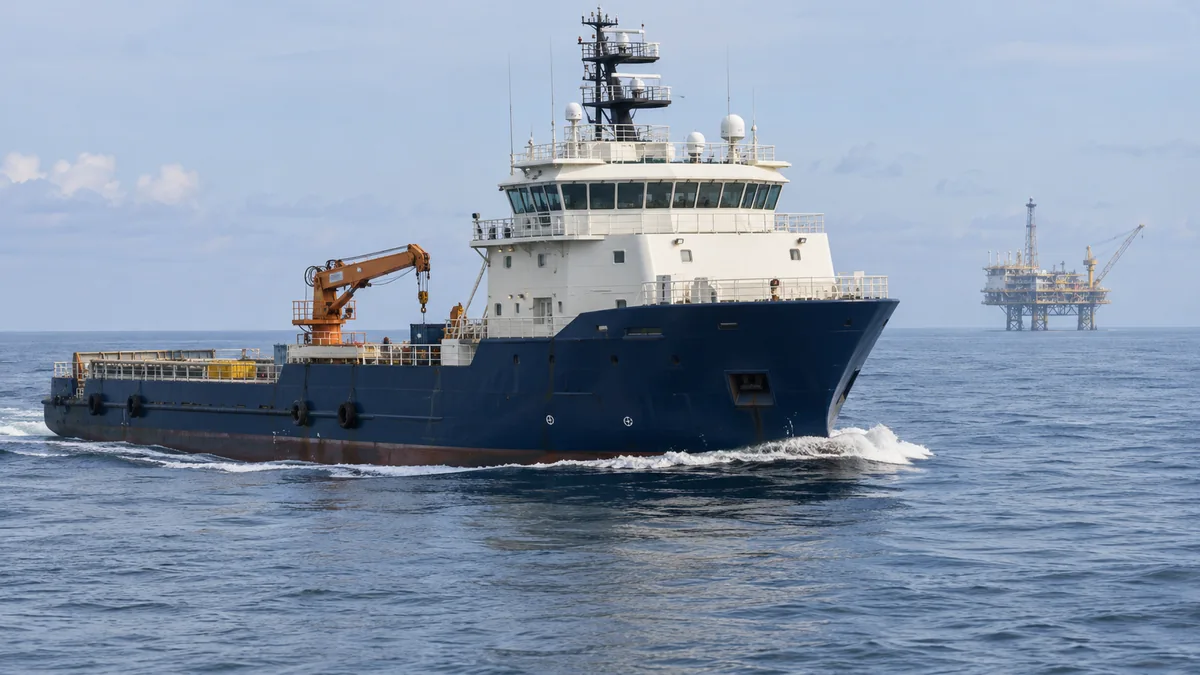
Tidewater is winning higher prices for new vessel contracts and forecasting a stronger 2027. Yet it has lowered the profit margin it expects from this year's sales as conflict-related operating costs rise.
The offshore vessel operator cut its 2026 gross margin forecast to 47.5% to 48.5%, from the 49% to 50% range it published in August. Gross margin is the share of revenue left after vessel operating costs, before depreciation and the company's other expenses.
The part of the cost increase customers do not have to cover
Research by Ticker Byline shows that the forecast portion of Middle East conflict costs not contractually billable to customers has roughly doubled since August, to $11.1 million from $5.5 million. We compared the original estimate with the new one and subtracted the amounts customers can be billed under their contracts.
| Conflict-related costs | August forecast | November forecast |
|---|---|---|
| Total expected costs | 13.1 | 19.8 |
| Contractually billable to customers | 7.6 | 8.7 |
| Difference | 5.5 | 11.1 |
Chief Executive Officer Quintin Kneen said elevated operating costs linked to the conflict are now expected to affect the fourth quarter.
New contracts point to better prices
Tidewater owns vessels that support offshore drilling, construction and production. The average daily rate on new term contracts reached $27,373 in the September quarter, up 12.5% from the June quarter. The rate actually earned across the working fleet was lower, at $23,775, as older contracts remained part of the mix.
Higher rates helped quarterly revenue rise to $360.4 million from $342.3 million in the preceding quarter. But active-fleet utilization, the share of available vessel days worked, fell to 79.2% from 81.4%. Reported operating profit of $50.3 million was about 20% below the year-earlier quarter.
Stronger new-contract pricing therefore has to work its way through a business that is also facing higher costs and using a smaller share of its active fleet.
A larger fleet changes the next-year comparison
Tidewater forecasts 2027 revenue of $1.70 billion to $1.75 billion and gross margin of 51% to 53%. Its updated 2026 revenue range is $1.43 billion to $1.44 billion.
Part of next year's larger business comes from an acquisition already completed. Tidewater bought Wilson Sons Ultratug Offshore on August 31, adding 22 Brazilian-built platform supply vessels. A full year of those operations will contribute in 2027, compared with four months in 2026.
The transaction's $500 million base enterprise consideration included assumed debt. Cash paid at closing was $283.1 million. September cash stood at $390.8 million, while debt at balance-sheet carrying value had risen to $862.3 million from $653.2 million in June.
The opportunity is to earn the richer contract rates across a larger fleet. The immediate challenge is keeping more of that revenue after operating costs, the weakness behind the lower 2026 margin target.
The Tidewater company profile records the forecast changes, completed acquisition and cash-flow definitions.