Hornbeck's merger brought in cash. Operations used $76.7 million.
A new earnings forecast rests on contract wins and merger savings. The enlarged offshore fleet also faces a busy maintenance year.
Research by Ticker Byline shows that Hornbeck used $76.7 million of cash in operations during the third quarter, even as it reported $58.7 million of adjusted free cash flow.
The difference matters as the offshore services group's larger fleet heads into a heavy maintenance year. Hornbeck completed its all-stock merger with Helix on September 1. The quarterly accounts include three months of the old Hornbeck business and just one month of Helix.
What the adjusted figure leaves out
Hornbeck's measure starts from adjusted EBITDA, which adds back interest expense, income taxes, depreciation and amortization, along with expenses such as merger costs and stock compensation. It then deducts selected maintenance, interest and tax payments. Changes in operating balances and growth spending are left out.
Comparing the nine-month cash statement with Hornbeck's first-half accounts shows that movements in operating balances absorbed $63.1 million during the quarter. Receivables were the biggest component. Drydocking payments used another $12.9 million, already included in the operating cash outflow.
The merger also brought a cash cushion
The Helix transaction added $637.9 million of acquired cash, recorded under investing activities. Hornbeck ended September with $471.6 million in cash and a further $125 million available under an undrawn credit line.
The reported quarterly net loss was $85.7 million, including substantial merger and stock-compensation charges. After removing selected items, the company reported adjusted net income of $28.2 million.
More work, more time in the yard
Hornbeck's first full-year outlook for the combined business calls for $500 million to $550 million of adjusted EBITDA in 2027.
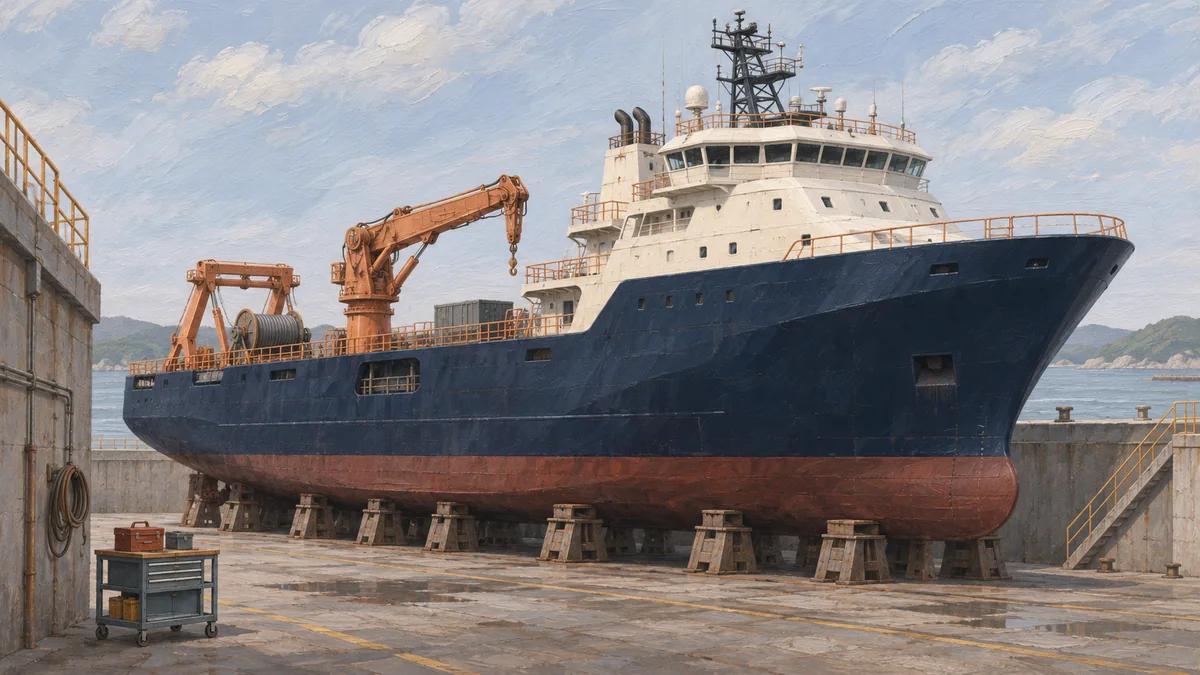
The forecast incorporates a heavier regulatory drydock schedule: 1,225 vessel-days out of service in 2027, including 407 in the first quarter.
New work and savings provide support. Five-year Shell contracts for a well-intervention vessel and an offshore supply vessel begin in 2027. Hornbeck has implemented measures expected to save $20 million annually and is targeting a $30 million annual cost-saving rate within the first year after the merger.
The earnings forecast includes the $20 million of anticipated savings and a contribution from the first new multipurpose support vessel, expected to begin commercial work late in the third quarter of 2027. Collecting customer payments and delivering those savings will matter while the existing fleet works through its maintenance schedule.