Analysis LGIH
LGI Homes closed more homes. Its net orders fell 61%.
A smaller sales pipeline sits behind stronger quarterly results. Our comparison separates orders from completed sales and traces the first cut to the annual closing ceiling.
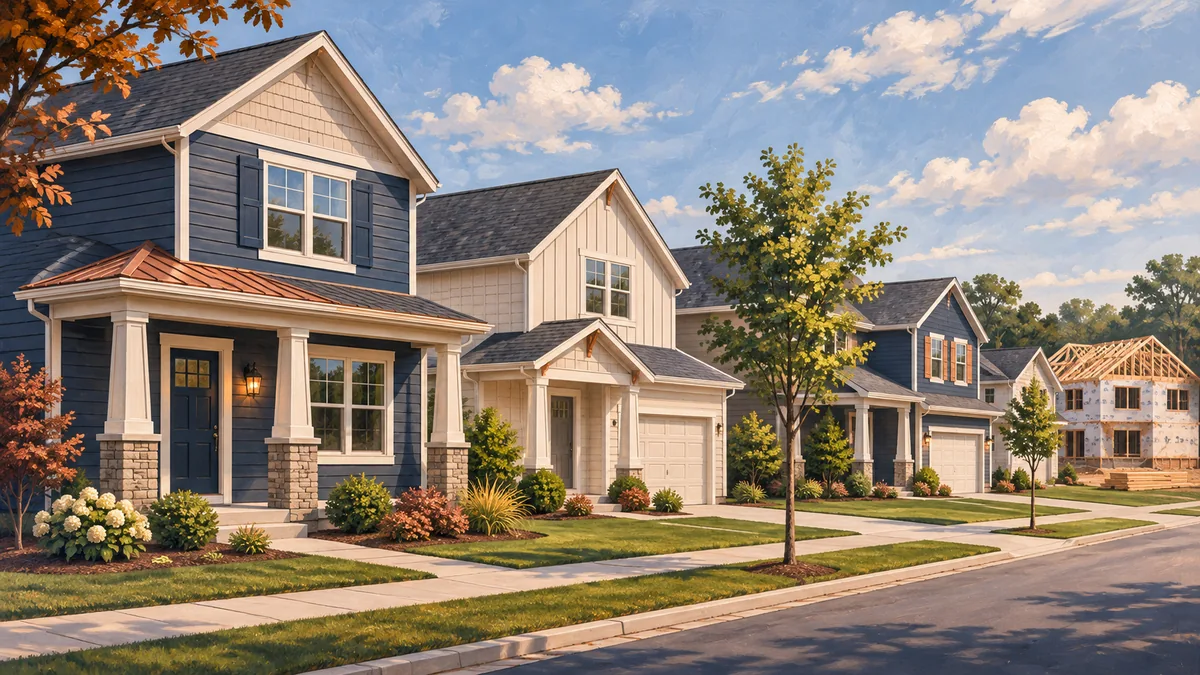
LGI Homes delivered more homes and earned more money in the third quarter. Research by Ticker Byline shows that quarterly net orders fell 61% to 609 from 1,570 a year earlier, based on our comparison of its nine-month and first-half disclosures.
The homebuilder also cut its annual home-closing forecast to 4,600–4,800 from 4,600–5,400. That removes 600 homes from the upper end and lowers the midpoint by 6%. The wider range had survived both February's initial forecast and August's update.
More completions, fewer new orders
Net orders count contracts signed after cancellations, including retail and wholesale business. Subtracting the first-half totals from the nine-month figures reveals a much weaker third quarter, even as completed sales increased.
| Homes | 2026 | 2025 |
|---|---|---|
| Net orders, calculated | 609 | 1,570 |
| Total closings | 1,222 | 1,107 |
| New-home closings | 1,189 | 1,065 |
Total closings include sales of currently or previously leased homes; new-home closings exclude them. Wholesale buyers accounted for 215 new-home closings, versus 163. Excluding those wholesale sales, new-home completions still rose about 8%, to 974 from 902. The delivery improvement was broader than bulk transactions.
The order weakness was not confined to bulk backlog, either. September's 685-home backlog included 85 bulk-sale homes. Removing those leaves 600, versus 1,245 a year earlier, a decline of about 52%.
Management described affordability and financing costs as obstacles. Its sales process now includes more buyers who need additional time to qualify for financing. High cancellations were already visible in August: the first-half cancellation rate was 47.4%, versus 48.9% for the first nine months.
Profit and cash moved the other way
The smaller order pipeline has not yet translated into falling quarterly profit. GAAP net income rose to $24.6 million from $19.7 million. Homebuilding revenue increased to $437.5 million from $396.6 million, although gross margin fell to 20.2% from 21.5%.
LGI maintained August's annual average selling-price forecast of $360,000–$370,000 and its gross-margin targets. The revised closing outlook therefore narrows expected volume without announcing another margin cut.
Operating cash flow also improved. Subtracting first-half cash flow from nine-month totals gives $38.9 million generated in Q3, versus $13.2 million used a year earlier. Nine-month cash generation benefited heavily from a smaller inventory cash drain and a larger contribution from accounts payable.
September cash was $69.4 million. Notes payable had a $1.544 billion carrying value, down from $1.581 billion in June. That improvement matters alongside the order decline: LGI's current financial profile shows a business generating cash while its future sales pipeline contracts.