How Coca-Cola Consolidated grew operating profit as aluminum costs rose
Slower overhead growth is helping the bottler absorb higher input costs. Its share repurchase and debt repayments explain another part of the earnings story.
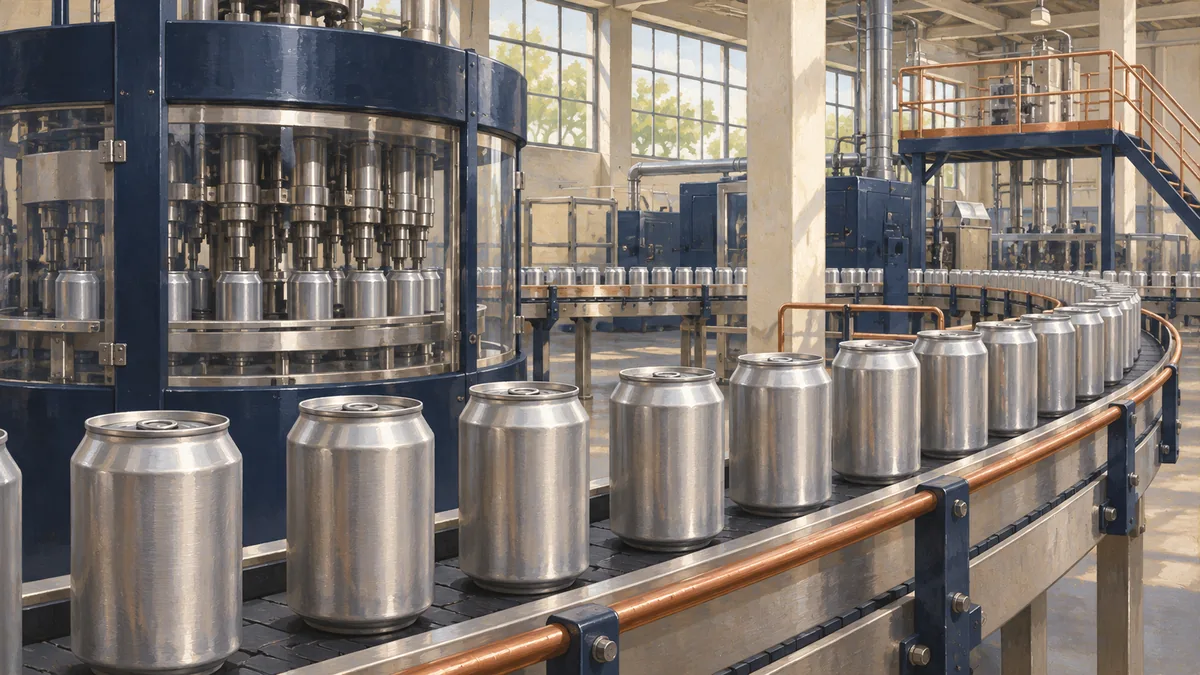
Coca-Cola Consolidated is growing operating profit faster than sales even as aluminum and fuel get more expensive. The help is coming from the cost of selling and delivering its drinks, where expense growth has slowed sharply.
That improvement is starting to deliver on management's August expectation. It also supports a business working through the financing costs of last year's large share repurchase.
The August expectation shows up
The bottler's third-quarter sales rose 5.4% to $1.99 billion, with physical case volume up 1.4%. Higher prices and more drinks sold both contributed. Adjusted operating profit increased 6.7% to $262.9 million.
In August, management said operating-expense growth should moderate as it began comparing with periods that already included last year's frontline wage investment.
Research by Ticker Byline shows that adjusted selling, delivery and administrative expenses grew just 0.8% in Q3, compared with 6.9% in Q2. Sales are now growing much faster than that expense base.
Annual wages and employee benefits continued rising. The comparison now includes the earlier pay investment in both years, while expense management also helped.
A stronger operating margin despite higher input costs
Aluminum and fuel costs rose faster than the company's price increases could cover. Changes in the mix of products sold also hurt gross margin, the share of sales left after producing or buying the drinks.
Adjusted gross margin fell to 38.6% from 39.6%. Yet adjusted operating margin, after selling, delivery and administrative costs, rose to 13.2% from 13.0%.
Those adjusted operating figures remove changes in the market value of commodity hedges. Reported operating profit rose more strongly, to $271.6 million from $246.6 million, helped by favorable hedge accounting.
The buyback changes the per-share picture
The improvement becomes less clear below operating profit. Net interest expense reached $28.8 million, up from $4.7 million a year earlier. Adjusted net profit slipped to $175.3 million from $179.2 million.
Adjusted basic earnings per share still rose to $2.63 from $2.06. Last November, Coca-Cola Consolidated bought back approximately $2.4 billion of shares from a Coca-Cola Company subsidiary. Fewer shares now divide the earnings, while the borrowing used to help fund that purchase adds interest costs.
Reported net profit rose to $175.9 million from $142.3 million. That comparison also benefits from a much smaller noncash charge on obligations tied to older distribution-territory acquisitions. The company removes those valuation changes from adjusted net profit.
More debt repaid, with cash still worth watching
Coca-Cola Consolidated repaid another $175 million of debt in October, taking the year's total through that month to $450 million. The earlier $275 million was already disclosed in August. A further $25 million term-loan payment is scheduled for November 9.
Cash generation remains positive, although it weakened. Subtracting the first-half statement from the nine-month statement puts Q3 operating cash flow at $244.2 million, compared with $316.7 million a year earlier. After cash capital spending, $172.2 million remained, versus $264.1 million.
The company kept its annual capital-spending expectation at approximately $300 million. The next quarter will show whether slower expense growth keeps supporting operating profit, alongside further progress on debt. Our Coca-Cola Consolidated company profile tracks the financial comparisons, repurchase, financing and remaining obligations.