US Foods is earning more per case. Why trim the outlook?
Better margins are supporting earnings despite slow volume growth. The lower ceiling on annual targets shows where that improvement meets its limits.
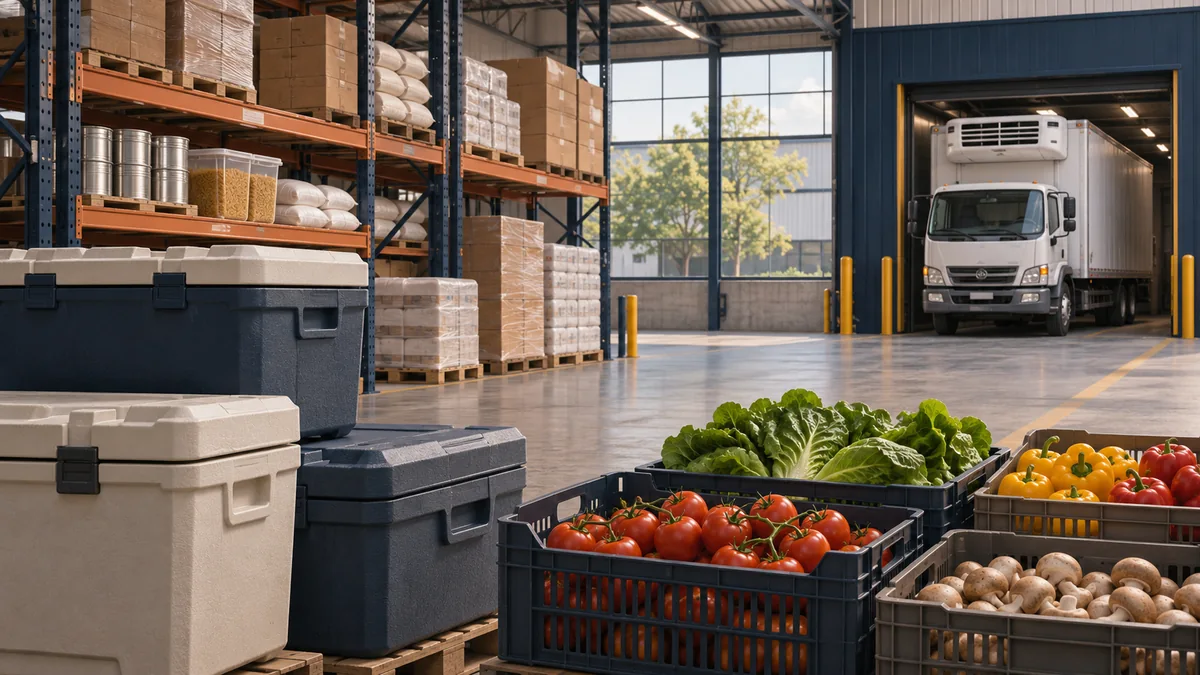
US Foods is making more profit on each case of food it delivers, even as overall volume grows slowly. That improvement helped adjusted quarterly earnings rise at a double-digit pace. It was still not enough to preserve the upper end of the distributor's annual growth targets.
The company narrowed its 2026 outlook on November 5, citing a sustained slower economy and elevated fuel costs. The results show how purchasing and operating improvements are supporting profit while demand limits the room for an upgrade.
Better economics inside each delivery
Third-quarter sales rose 2.1% to $10.4 billion. Adjusted EBITDA increased 9.9% to $555 million, and adjusted earnings per share rose 17.8% to $1.26. EBITDA measures earnings before interest, taxes, depreciation and amortization; US Foods also adjusts for items including stock compensation, restructuring and inventory-accounting effects.
The company's per-case figures make the operating improvement easier to see. Adjusted gross profit per case increased to $8.66 from $8.30. Adjusted operating expenses rose more slowly, to $6.13 from $5.97. That left $2.53 of adjusted EBITDA per case, up from $2.33.
Management points to better purchasing through its vendor program and ongoing warehouse, delivery and administrative improvements. The company is extracting more profit from the business it handles, rather than relying on a large jump in sales.
Restaurant growth held up, but the wider picture slowed
Organic volume, which excludes acquisitions, rose 1.2%, compared with 1.7% in the preceding quarter. Independent restaurants remained a stronger part of the business: their organic case volume grew 5%, matching Q2. Chain-restaurant volume fell 1.5%.
Healthcare and hospitality customers also ordered more. Food-cost inflation was just 0.4%, down from 2.3% in Q2, contributing to the slower sales increase. Together, those figures show a business gaining volume in selected customer groups while the broader market remains sluggish.
The new annual outlook calls for sales growth of 4% to 5%, adjusted EBITDA growth of 9% to 11% and adjusted earnings-per-share growth of 18% to 20%. The original February targets, reaffirmed in August, were 4% to 6%, 9% to 13% and 18% to 24%.
Each lower endpoint is unchanged; the more optimistic outcomes have been removed. The forecasts already included an extra fiscal week, expected to contribute about one percentage point to annual case-volume and adjusted EBITDA growth.
The reported profit jump has an accounting assist
Net income rose 42.5% to $218 million, while reported operating profit increased $89 million to $371 million. A favorable inventory-valuation comparison explains a substantial part of that larger headline increase.
Under last-in, first-out accounting, known as LIFO, inventory reserve adjustments produced a $3 million benefit this quarter, compared with a $46 million expense a year earlier. The $49 million swing accounts for a little over half the operating-profit increase. Removing only those LIFO adjustments would still leave a $40 million improvement.
The adjusted figures also show progress: gross profit rose $102 million while operating expenses increased $52 million, leaving the $50 million EBITDA gain. Fewer shares added another lift to earnings per share; adjusted net income grew 12.2%, compared with the 17.8% per-share increase.
Cash supports buybacks and a completed acquisition
First-nine-month operating cash flow increased to $1.16 billion from $1.08 billion. US Foods reported $898 million of free cash flow after capital spending and including proceeds from property sales, up from $806 million.
Its cash-flow statement records $635 million paid to repurchase shares over that period. The company separately reported $690 million of share purchases including fees, commissions and applicable excise tax. Those figures use different bases. A further $450 million remained authorized at quarter-end.
On October 30, US Foods completed its roughly $125 million cash-funded acquisition of Prime Line Distributors, which supplies specialty and imported Italian food. That purchase followed the September quarter and expands the assortment available alongside the company's Pronto delivery service.
Our US Foods company profile tracks the acquisition, cash generation, debt refinancing and earlier forecasts. The near-term investment question is whether improving profit per case can continue to offset slower overall growth and higher fuel costs.