Matson expected a quieter finish. China freight changed the outlook.
Strong demand is lasting beyond peak season and lifting the shipping profit forecast. New vessels are absorbing much of the extra cash.
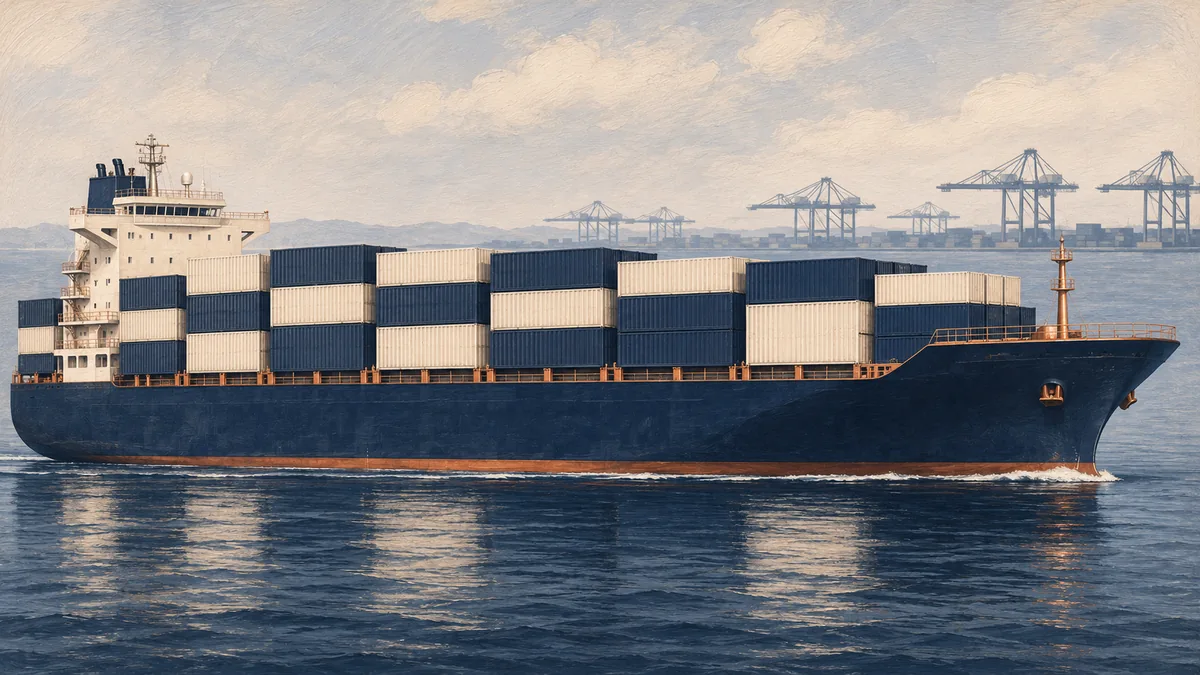
Pacific shipper Matson expected demand on its China route to settle into a more normal pattern after peak season. It now expects the strong conditions to continue through year-end and into early 2027, changing the outlook for its shipping business.
In August, Matson forecast that Q4 Ocean Transportation operating income would be modestly below the previous year's $136 million. It now expects approximately 50% growth, equivalent to about $204 million.
The strong quarter lasted longer than expected
Matson's Q3 Ocean Transportation operating profit rose 62% to $239.1 million. That exceeded its earlier indication of roughly 45% growth. China container volume increased 16%, while higher freight rates helped profit grow faster than volume.
Management says demand from e-commerce and other retail customers remained strong into October. Weather disruptions, canceled sailings and congestion at Asian ports constrained available shipping capacity, increasing the appeal of Matson's faster service.
The new outlook assumes that demand and freight rates remain strong. Matson expects its China ships to be full or nearly full in Q4. The shift is substantial: a quarter expected to produce lower shipping profit now points to a large increase.
The improvement is concentrated on the China route
The rest of the network is mixed. Hawaii container volume slipped 0.3% in Q3 and Alaska volume fell 4.8%. Income from the SSAT terminal joint venture also declined.
Logistics operating profit grew to $16.1 million from $13.6 million, but its margin narrowed as revenue grew faster than profit. China-led strength is carrying the broader outlook.
Taxes will also make the earnings comparison less favorable. Matson expects a Q4 tax rate of about 20%, compared with 5.2% a year earlier, when a one-time tax benefit boosted net income.
New ships are absorbing the extra cash
Research by Ticker Byline shows that nine-month cash left after capital spending was almost unchanged at $110.8 million, versus $111.5 million a year earlier. Operating cash flow rose 24%, but payments for new ships increased enough to absorb most of that gain.
The calculation includes $252.3 million of vessel construction payments and $97.5 million of other capital spending. Matson is building three new ships, with deliveries expected in 2027 and 2028.
It has funding set aside: the Capital Construction Fund held $298.6 million in cash and investments at September 30, alongside $221.9 million of ordinary cash. Matson has also lowered its annual capital-spending forecast to about $505 million from $550 million to $570 million.
The stronger freight market gives Matson more earnings capacity while it renews its fleet. The next results will show whether the unusually strong China conditions last as long as the revised forecast assumes.
Our Matson company profile tracks the earlier expectations, segment results, fleet commitments, cash funding and debt.