Magnolia expands its buyback plan. What cash is left after WildFire?
The oil producer has more room to retire shares and a larger drilling budget ahead. Its latest cash figures show how deal costs and working capital change the amount available for returns.
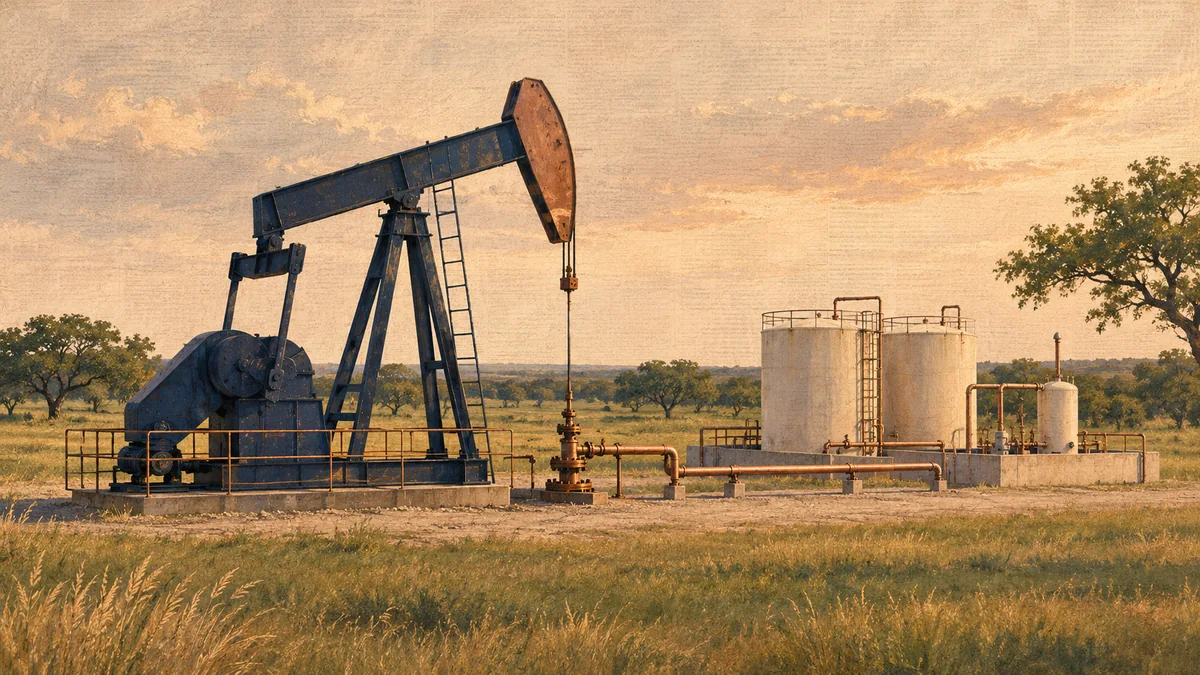
Magnolia Oil & Gas has given itself room to repurchase another 15 million shares after completing the WildFire acquisition. Its first plan for a full year with those assets also calls for $900 million to $950 million of drilling and completion spending in 2027.
The South Texas producer is generating enough operating cash to cover both property investment and shareholder payments in its latest quarter. The question is how much of that cash remains available as the larger business moves beyond its acquisition quarter.
The cash behind the buybacks
Magnolia spent $60.2 million buying shares and paid $43.1 million in dividends during Q3. Together, those payments were 46% of its $223.7 million in adjusted free cash flow.
Research by Ticker Byline shows that the same payments represented about 64% of Magnolia's free cash flow before the acquisition-cost adjustment. The difference comes from $63.3 million of cash transaction and integration costs that the adjusted measure excludes.
| Cash measure | Amount |
|---|---|
| Operating cash flow minus cash property investment | $206.7 |
| Magnolia free cash flow, also removing operating working-capital movements | $160.4 |
| Adjusted free cash flow, adding back cash deal costs | $223.7 |
Operating cash flow was $369.0 million, up from $247.1 million a year earlier. After $162.3 million of cash property investment, $206.7 million remained, roughly twice the quarter's shareholder payments. Cash also benefited from a $46.3 million release of working capital, which Magnolia removes when calculating its free cash flow.
A larger business, and a different starting point
WildFire closed on September 10, so Q3 contains only part of its contribution. Total production rose 17% from a year earlier, while higher oil prices also helped revenue climb to $513.9 million from $324.9 million.
Adjusted EBITDAX, an earnings measure before interest, taxes, depreciation, depletion, amortization, exploration and selected other costs, rose 79% to $392.0 million. It excludes the transaction and integration expense as well as unrealized derivative losses.
Reported net income rose just 3% to $80.5 million. Diluted earnings per share fell to $0.35 from $0.40 as the share count increased following the acquisition financing and shares issued to WildFire's seller.
The board expanded repurchase authority on November 2. Management reported 22.6 million shares remaining after the increase. That gives it flexibility to accelerate purchases above its stated program of at least 1% of outstanding shares each quarter.
Where the next year's cash has to go
The 2027 drilling budget is intended to produce 4% to 5% organic growth in both oil and total output. Magnolia measures that growth from an adjusted Q2 base that includes WildFire as though it had already been owned and removes production from assets subsequently sold. The acquisition's initial jump in company size is therefore separate from that growth target.
For the first full combined quarter, Q4, management expects production of 159,000 to 161,000 barrels of oil equivalent a day and roughly $235 million of drilling and completion investment. It also expects to capture more than one-third of the acquisition's targeted annual cost savings by year-end.
Debt remains another claim on cash. Magnolia ended September with $1.94 billion of principal debt and $17.5 million in cash. Management says net debt is already below one times forecast 2027 adjusted EBITDAX at current oil and gas futures prices. Using Q3 earnings at an annualized rate, its presentation puts the ratio at 1.2 times.
The stronger production base supports the return program. The next test is whether integration savings, commodity prices and the larger drilling budget leave enough cash to keep buying shares while reducing that debt. Our Magnolia company profile tracks the completed deal, financial history and targets.