Haemonetics sees faster growth. How much will reach earnings?
Plasma demand lifts the sales outlook, while the company trims expected margin gains. Payment timing also explains much of the improvement in cash flow.
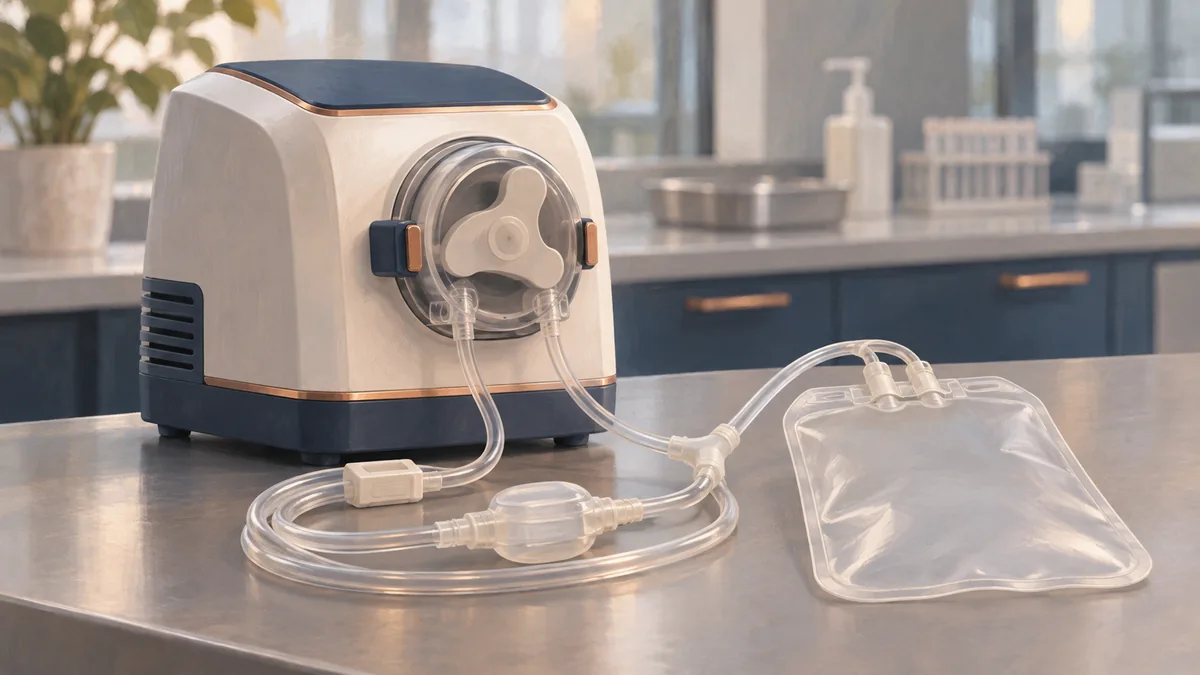
Haemonetics expects stronger sales growth from the business that supplies plasma-collection equipment and disposables. Its new annual outlook also calls for less margin improvement than it expected in August, after a quarter of rising personnel and freight costs.
The medical-technology company raised its fiscal 2027 organic revenue-growth forecast to 6% to 9% from 4% to 7%. Its Apheresis division, which includes plasma collection, is now expected to grow at a high-single-digit rate instead of the earlier low- to mid-single-digit range.
Reported sales are forecast to rise 8% to 11%, up from 5% to 8%. Haemonetics still expects adjusted earnings per share to grow at a rate comparable to reported revenue. It now expects annual adjusted operating margin to be flat to half a percentage point higher, versus the half- to one-point improvement it previously forecast.
Our Haemonetics company profile follows its growth targets, cash generation, debt and completed Vivasure acquisition.
Plasma leads the sales improvement
Quarterly revenue rose 9.3% to $357.8 million, with organic growth of 10%. Plasma-business revenue grew 16.5%, or 17.7% after adjusting for currency movements and discontinued liquid-solution products. Blood-management technologies also grew, while interventional products advanced more slowly.
The company has been expanding its relationship with CSL Plasma. An August supply agreement allows CSL to use Haemonetics' NexSys collection devices and related disposables. In October, Haemonetics said CSL anticipated a transition across all its current U.S. centers by the end of calendar 2027. The agreement is non-exclusive and has no minimum purchase commitment.
That relationship adds a growth opportunity beyond the latest quarter. The new November forecasts provide the financial update Haemonetics had deferred when it disclosed the agreement and the broader rollout.
Sales are growing faster than adjusted profit
Quarterly adjusted operating profit rose 7.8% to $94.1 million, trailing the increase in sales. Adjusted operating expenses rose about 15%, driven by personnel and freight costs. The adjusted operating margin slipped to 26.3% from 26.7%.
Tariff refunds and a shift toward more profitable products helped gross profit. Haemonetics did not give a separate dollar amount for the refunds in the release, and they remain included in its adjusted results.
Reported net income rose to $46.3 million from $38.7 million. Adjusted earnings increased to $1.35 a share from $1.27. The larger rise in reported operating profit also benefited from the absence of last year's intangible-asset impairment charge.
The cash improvement has a timing component
First-half operating cash flow increased to $180.4 million from $128.7 million. Free cash flow, after the company's equipment-investment deductions, rose to $142.9 million from $91.2 million.
Research by Ticker Byline shows that the change in payables and accrued expenses contributed $71.2 million more cash than a year earlier, exceeding the $51.7 million increase in operating cash flow. Smaller cash releases from inventory offset part of that benefit. The comparison helps explain why cash improved much faster than first-half profit.
Haemonetics used cash to repay $100 million of revolving borrowings during the first half. It ended September with $260.7 million in cash and cash equivalents and $1.12 billion of debt at its balance-sheet carrying value.
For the full year, the company now targets free cash flow above 80% of adjusted net income, versus roughly 80% previously. The higher growth outlook gives it more sales to work with; costs and working-capital timing will shape how much becomes earnings and cash.